
Someone asked me recently, “How can we take back our village?” I told them that question is a lot more complicated than it sounds. Before we can talk about taking Placencia back, I believe we have to understand what held us together in the first place.
Growing up in Placencia, everybody was welcome. But that welcome came with an understanding: you respected our people, our traditions and our way of life. Back then, if you disrespected one of us, you disrespected all of us. We had our own arguments, family disagreements and conflicts. We were not some perfect little village. But there was a sense of family and belonging.
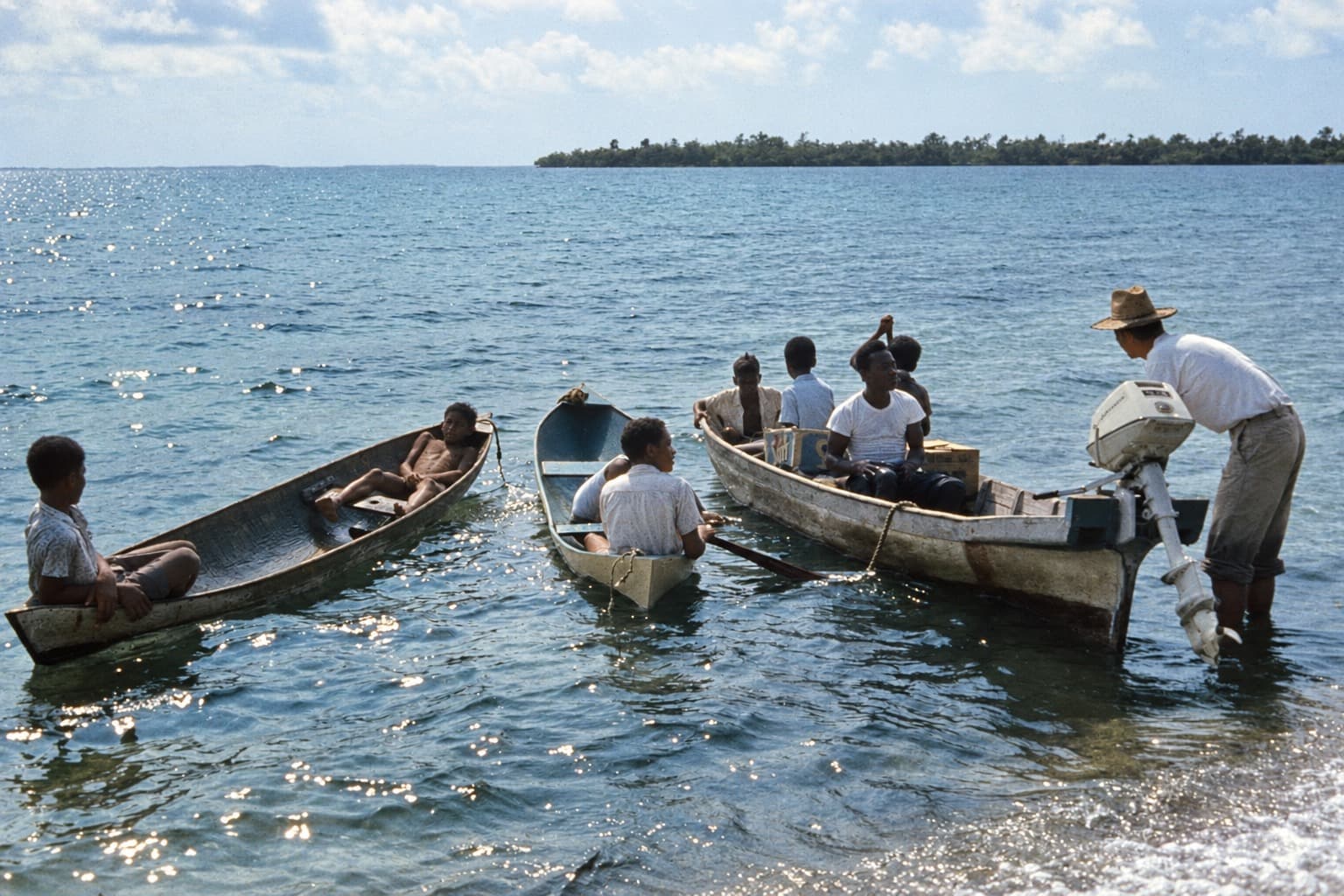
I believe a big part of that unity came from something people might overlook today: we were geographically isolated from much of the rest of Belize. Getting supplies, travelling or finding help was not as simple as jumping into a vehicle. The sea was our connection to the wider world, but the people around us were the people we depended on. Our survival depended on working together.
When the sea was the road
Coastal vessels and smaller boats connected Placencia with other ports and settlements. Fishing took people to the reef and cayes, while trips for passengers and cargo linked village life to the wider country.
Research by anthropologist Eric Koenig records the completion of a dirt road along the peninsula in 1984, followed by bus service after 1985. Those changes made regular overland connections much more practical. A place where the sea had been the main route out was becoming easier to reach by road.
That is why I do not think our old sense of community was simply a matter of everybody liking everybody else. You might have disagreed with a neighbour, but you still needed one another. Our geography made cooperation a practical necessity, and over time that necessity became part of how we understood the village.
The walk for water
I also remember my brother and I walking about a mile to the village reservoir with our pigtail buckets to fetch water. We tried to get there early, queue up and fill our buckets. Getting the water was one thing. What we dreaded was the journey back home, carrying those heavy buckets.
Back then, vehicle access was little to none, and so much had to be carried by hand. When I think about it now, I have to laugh. We certainly grew strong arms, backs and legs, whether we wanted the exercise or not. But that was everyday life for us, and it tells you something about what living in an isolated village actually meant.
The cooperative that helped power a village
In 1962, local fishermen formed the Placencia Producers Cooperative Society. By organizing, members improved their ability to process, market and earn from seafood, including lobster and conch. The cooperative grew into a major part of the local economy.
Its significance went beyond buying fish. Koenig’s historical research records that the cooperative supplied electricity to village residents from generators associated with its freezing plant, beginning in the early 1970s, well before a local connection to Belize Electricity Limited’s grid in the 1990s.
I remember that electricity clearly as a child. I believe the cooperative generator was switched off at around 8 p.m. every night. As kids, we made sure to stay awake and enjoy every last minute of it. We would watch the lights flicker before they went out. Then the candles came on, everybody headed to bed, and the next morning we looked forward to the electricity coming back.
It was not a perfect system. Outages were common. But we had our own electricity supply, provided by the cooperative. That is something I remember firsthand, not just something I read in a history book.
Think about what that meant. The cooperative did not just market lobster and conch. It also helped keep the lights on in our village. To me, that tells you why the Placencia Producers Cooperative became such an important institution.
I am not saying those arrangements were perfect or that everybody benefited equally. I am saying our people created institutions because they understood that, without working together, it would be harder to survive. Cooperation was not just a slogan. It had a practical purpose.
The work of a village was never only fishing
Fishing was central to Placencia’s economy, but the village depended on many kinds of labour. Families prepared food, repaired and maintained equipment, operated shops and provided services that supported daily life.
Carol Jane Key’s study of the village’s transition from fishing to tourism also documents women’s livelihoods, including meals, laundry and small enterprises. Some of these activities later became formal businesses as more visitors arrived.
When I talk about how Placencia survived, I do not mean only fishermen or cooperative members. Women, families and people providing all sorts of services kept the village running too. That is part of our history, and I do not want it left out.
My grandmother, Doris Leslie, is one reason I feel so strongly about this. She stayed in the village, but she was not simply a housewife. She was an entrepreneur and, to me, one of the pioneers of tourism in Placencia.
As our family tells it, British soldiers came to Placencia for rest and relaxation, but there was nowhere suitable for them to stay. My grandmother recognized that need. Together with my grandfather Liston, she established Sea Spray Hotel, which the hotel’s published history dates to 1964.
My family also remembers her starting Flamboyant Restaurant. She ran the village post office, too, alongside a little shop, and historical accounts remember her looking after the village telephone. Think about that: she was helping people find somewhere to stay, get a meal, collect their mail, make a call and buy basic supplies. In our isolated village, those were not small things.
And my grandmother was not the only one. Women in Placencia were entrepreneurs. They saw what people needed, made a living and kept important services running. Their work belongs right alongside the history of our fishermen and our cooperative.
As Placencia connected, its livelihoods changed
My grandmother’s story reminds me that tourism was taking root in Placencia before the road was completed. It began with local people meeting real needs, long before anyone was talking about the destination as a major tourism industry.
Later, better transport and infrastructure brought more opportunities. Fishers and boat captains could use their experience to guide visitors. Families opened guesthouses, restaurants and shops. A growing number of residents could earn directly from individual customers rather than relying on the fishing economy alone.
Key’s 2002 research describes declining earnings from lobster and conch after 1990 as an important part of the shift toward tourism-related work. The change was gradual and uneven. Fishing and tourism often overlapped, and cooperation did not disappear when new businesses appeared.
This is where I think something important changed. Tourism brought opportunity, and I am not saying that was a bad thing. You could become a tour operator, open a guesthouse or start a restaurant and earn a living without depending on the same cooperative structures as before. I believe that independence gradually changed how some of us related to one another.
That is my interpretation, not a statistic and not a claim that tourism alone caused our unity to weaken. The economic transition is documented. What I am asking us to think about is whether, as it became easier to survive individually, we stopped seeing one another’s problems as our own.
What independence did not change
But here is the irony I keep coming back to. Your hotel can operate independently of my business. A fishing guide can work for their own clients, and a restaurant can build its own customer base. But none of us lives or works in a place that belongs to us alone.
We still share the same sea, shoreline, roads, public spaces and reputation as a destination. When the marine environment suffers, when public access is lost or when decisions damage the village, the consequences do not stop at somebody’s property line.
Hurricane Iris in 2001 was another reminder of our shared vulnerability. Homes, businesses and infrastructure across southern Belize suffered devastating damage. The circumstances may be different today, but the need to look out for one another has not disappeared. Tourism changed how we make a living; it did not end our dependence on the community around us.
Then came COVID-19. When travel restrictions brought tourism to a standstill, I remember people in Placencia turning back to the sea, including commercial fishing, to help their families survive. After all our growth in tourism, the sea was still part of how people tried to make ends meet when visitors stopped coming.
Fishing was not an easy fallback either. The pandemic also hurt seafood demand and prices. But seeing people draw on the skills and resources that had supported our village long before tourism reminded me those older livelihoods had not become irrelevant.
Look at what beach erosion and sargassum have exposed right in front of us. You might own a hotel or a piece of beachfront, but the shoreline does not stop at your property line. When the beach erodes or sargassum piles up, the consequences reach residents, fishermen, tour operators, restaurants and visitors alike. No single business can solve a problem affecting the whole village.
That is the irony. When tourism stopped, we turned back toward the sea for survival. Now the condition of our coastline reminds us that we cannot protect this place one property at a time. We still need coordination, proper planning and people willing to stand together.
Belonging means taking part
I remember a time when you could wear out your welcome very quickly if you started disrespecting local people or traditions. We had disagreements among ourselves, plenty of them, but disrespect toward one of us could become a concern for all of us. I am not calling for people to be thrown out today. I am talking about the sense of collective responsibility we once had.
And I want to be fair about this. Many people who moved to Placencia have contributed tremendously to the community. Some of us who were born and raised here have also contributed to the very problems we complain about. I do not believe respect or accountability should depend on birthplace, surname or property ownership. It must work both ways.
If you are visiting Placencia, I hope you see more than a beach and a collection of businesses. Behind the destination are the families, working people, fishing traditions and shared institutions that helped build this village. Those things still matter to the people who call it home.
If you want to learn more about the people, photographs and stories of old Placencia, I encourage you to visit the Placencia in the Old Days Facebook group ↗. You can request to join and learn from the memories shared there. Every photograph and recollection is another piece of our village’s history.
A shared future, by choice
So when somebody asks me how we can take back our village, I do not think the answer is to push people away or pretend the past was perfect. I think the real question is how we rebuild our ability to organize, protect what we share and stand up for one another, even when we have different interests.
We no longer need the same circumstances that led fishermen to establish the cooperative in 1962. But we still need people to participate in community decisions, protect shared resources, preserve our history and be willing to speak up when something affects the whole village. If we can build successful businesses, surely we can also find ways to act together.
Our geography once forced us to stand together. Today, our shared future should be reason enough. Because I do not believe we have stopped depending on one another. I believe we have started behaving as if we do not.